
The Ultimate Guide to Rebuilding Civilization: A Comprehensive Plan
Recent global discussions‚ particularly at the World Economic Forum in Davos (2024 & 2025)‚ center on “Rebuilding Trust” – a crucial element for societal recovery.
Ukraine’s reconstruction‚ estimated at hundreds of billions‚ highlights the immense scale of rebuilding efforts. This guide offers a phased approach‚
addressing immediate needs and long-term sustainability‚ drawing lessons from past catastrophes and embracing technological advancements with caution.
I. Understanding Societal Collapse & The Need for Rebuilding

Societal collapse isn’t a singular event‚ but a complex process of decline affecting multiple interconnected systems. Historically‚ these collapses stem from a confluence of factors – environmental degradation‚ climate change‚ resource depletion‚ economic instability‚ pandemics‚ and failures of governance. Recognizing these patterns is paramount to preventing recurrence.
The current global landscape‚ marked by geopolitical tensions‚ economic uncertainties‚ and environmental crises‚ presents a heightened risk of systemic failure. The recent emphasis on “Rebuilding Trust” (World Economic Forum‚ Davos 2024 & 2025) acknowledges a growing erosion of faith in institutions and a fracturing of social cohesion – precursors to broader collapse.
Understanding the fragility of complex systems is crucial. Over-reliance on interconnected networks‚ while efficient in stable times‚ creates cascading vulnerabilities. A single point of failure can trigger widespread disruption‚ as evidenced by supply chain issues and the rapid spread of misinformation.
Rebuilding isn’t merely about restoring what was lost; it’s about creating a more resilient and equitable society. This requires a fundamental reassessment of values‚ priorities‚ and systems. Learning from past civilizations – their successes and failures – is essential to avoid repeating mistakes. The reconstruction of Ukraine (estimated at $486 billion+) serves as a contemporary case study in the challenges and opportunities of rebuilding after large-scale devastation.
II. Immediate Post-Collapse Actions: Survival & Stabilization
The initial phase following a societal collapse prioritizes survival and stabilization. This demands a rapid shift from complex societal structures to localized‚ self-sufficient units. Immediate concerns revolve around securing essential resources: potable water‚ non-perishable food‚ basic medical supplies‚ and safe shelter. Establishing secure perimeters and rudimentary defense mechanisms is also critical.
Communication is paramount‚ even in a degraded state. Utilizing any remaining functional communication infrastructure – even short-range radios – to assess needs‚ coordinate efforts‚ and disseminate vital information is essential. Initial efforts should focus on establishing a basic understanding of the scope of the collapse and identifying surviving populations.
Community organization is key. Forming local councils or committees to manage resource allocation‚ enforce basic rules‚ and provide mutual aid fosters cooperation and prevents chaos. Prioritizing the needs of the most vulnerable – the sick‚ elderly‚ and children – builds trust and strengthens social bonds.
This stabilization phase isn’t about rebuilding civilization‚ but about preventing its complete disintegration. It’s a period of triage‚ focused on minimizing loss of life and laying the groundwork for future recovery. The “rebuilding” discussed at forums like Davos (2024 & 2025) acknowledges this initial‚ critical stage.

III. Securing Basic Needs: Food‚ Water‚ and Shelter
Securing food‚ water‚ and shelter constitutes the bedrock of post-collapse survival. Initial efforts must focus on locating and safeguarding existing supplies. Prioritize potable water sources – wells‚ springs‚ or rainwater collection – and implement purification methods to prevent disease. Simultaneously‚ ration existing food stores and initiate foraging or small-scale agriculture.
Shelter needs evolve with the seasons. Utilizing existing structures‚ even damaged ones‚ provides immediate protection. Repairing roofs‚ reinforcing walls‚ and insulating spaces are crucial. Longer-term solutions involve constructing more durable shelters using locally sourced materials – wood‚ stone‚ or earth.
Sustainable food production is paramount. Establishing community gardens‚ cultivating resilient crops‚ and exploring animal husbandry are vital for long-term food security; Knowledge of local edible plants and sustainable farming techniques becomes invaluable. Water conservation and efficient irrigation methods are equally important.
These efforts mirror the reconstruction challenges faced by Ukraine‚ requiring resourcefulness and prioritizing local needs. As discussed at global forums‚ trust and cooperation are essential for equitable resource distribution and collective survival. This phase demands practical skills and a commitment to self-sufficiency.
IV. Establishing Governance & Social Order
The vacuum left by societal collapse necessitates the swift establishment of governance and social order. Initial structures should prioritize safety‚ dispute resolution‚ and resource allocation. A foundational principle must be transparency and accountability‚ echoing the “Rebuilding Trust” theme emphasized at recent global forums like the World Economic Forum in Davos.
Early governance may take the form of local councils or committees‚ representing diverse community segments; These bodies should focus on establishing basic laws – prohibiting violence‚ protecting property‚ and ensuring fair access to essential resources. A clear system for conflict resolution‚ whether mediation or arbitration‚ is crucial.
Rebuilding trust is paramount. Leaders must demonstrate integrity‚ fairness‚ and a commitment to the common good. Open communication and participatory decision-making foster a sense of ownership and collective responsibility. Avoiding the pitfalls of centralized power and authoritarianism is vital.
This phase draws parallels to Ukraine’s reconstruction‚ where establishing a stable and accountable government is integral to long-term recovery. Effective governance provides the framework for rebuilding infrastructure‚ restoring the economy‚ and fostering social cohesion.
V. Forms of Post-Collapse Governance
Several governance models can emerge in the wake of collapse‚ each with strengths and weaknesses. Direct democracy‚ where citizens directly participate in decision-making‚ is feasible in small communities but becomes unwieldy at scale. Representative democracy‚ electing leaders to act on behalf of the populace‚ offers efficiency but risks corruption and detachment.
A council system‚ comprised of representatives from various sectors (agriculture‚ healthcare‚ security)‚ can ensure diverse perspectives. This aligns with the “Rebuilding Trust” ethos‚ promoting inclusivity and accountability. Federated structures‚ granting autonomy to local communities while coordinating through a central body‚ balance local control with overall cohesion.

Transitional governance might initially resemble a military or security-focused administration‚ prioritizing order and stability. However‚ this must swiftly evolve towards a more civilian-led system to avoid authoritarianism. The Ukrainian reconstruction experience underscores the importance of democratic principles even amidst crisis.
Regardless of the chosen model‚ a written constitution or charter outlining rights‚ responsibilities‚ and limitations of power is essential. This document serves as a foundation for legal frameworks and protects against abuse. Adaptability and responsiveness to evolving needs are also crucial.
VI. Re-establishing Communication Networks
Effective communication is paramount for coordination‚ information dissemination‚ and rebuilding trust – a key theme highlighted at recent World Economic Forums. Initial efforts should focus on establishing basic‚ low-tech networks. This includes messenger services utilizing runners or cyclists‚ and signal fires for long-distance alerts.
Shortwave radio‚ requiring minimal infrastructure‚ offers a vital broadcast capability. Ham radio operators‚ with their existing equipment and expertise‚ can play a crucial role. Repairing existing infrastructure‚ like telephone lines and cell towers (as seen in Ukraine’s reconstruction)‚ should be prioritized‚ though reliance on centralized systems is risky.
Community bulletin boards and designated information centers provide accessible updates. Utilizing existing infrastructure‚ even in a degraded state‚ is more efficient than starting from scratch. The integration of AI‚ while promising‚ requires careful consideration to avoid dependence and ensure equitable access.
Establishing a secure and reliable communication system is not merely about transmitting information; it’s about fostering a sense of community and shared purpose. Prioritizing redundancy and decentralization will enhance resilience against future disruptions.
VII. Utilizing Existing Infrastructure for Communication

Leveraging pre-collapse infrastructure offers the quickest path to re-establishing communication networks‚ minimizing resource expenditure and maximizing immediate impact. Prioritize assessment of existing telephone exchanges‚ fiber optic cables‚ and cellular towers – even if partially damaged. Repairing these systems‚ as observed in Ukraine’s reconstruction efforts‚ is more efficient than building anew.
Satellite communication terminals‚ if salvageable‚ provide a crucial link to the outside world. However‚ dependence on satellite infrastructure introduces vulnerabilities. Broadcast radio stations‚ even low-power ones‚ can disseminate vital information widely. Existing power grids‚ even intermittently functional‚ can be utilized to power communication hubs.
Abandoned buildings – schools‚ libraries‚ and government offices – can serve as central communication centers. Utilizing pre-existing road networks for messenger services and establishing relay points is essential. The World Economic Forum’s emphasis on “Rebuilding Trust” underscores the importance of transparent information flow.

Adaptability is key; infrastructure may require creative repurposing. Prioritize systems that are robust‚ decentralized‚ and accessible to the widest possible population.
VIII. Rebuilding Infrastructure: A Phased Approach
Infrastructure reconstruction demands a meticulously planned‚ phased approach‚ acknowledging limited resources and prioritizing essential services. Phase One: Stabilization focuses on immediate repairs to critical systems – water purification‚ basic sanitation‚ and emergency communication networks. This mirrors initial efforts in Ukraine’s reconstruction‚ prioritizing functionality over aesthetics.
Phase Two: Core Infrastructure centers on restoring power generation (even localized solutions)‚ transportation routes (roads‚ bridges)‚ and establishing rudimentary healthcare facilities. Utilizing existing infrastructure‚ as discussed previously‚ is paramount. Phase Three: Expansion & Modernization involves expanding infrastructure capacity and integrating sustainable technologies.
Prioritization must be data-driven‚ assessing population density‚ resource availability‚ and economic impact. Decentralized systems – localized power grids‚ water sources – enhance resilience. The World Economic Forum’s discussions on rebuilding trust highlight the need for transparent project management and community involvement.
Long-term planning should incorporate earthquake resistance (as seen in Tokyo’s reconstruction) and climate change adaptation. A phased approach minimizes disruption and maximizes the impact of limited resources.
IX. Prioritizing Infrastructure Projects (Energy‚ Transportation‚ Sanitation)
Initial infrastructure prioritization must address fundamental human needs: energy‚ transportation‚ and sanitation. Energy access is paramount – focusing initially on localized‚ renewable sources like solar or small-scale hydro‚ reducing reliance on vulnerable centralized grids. This aligns with sustainable resource management strategies.
Transportation networks require immediate repair of key roadways and bridges to facilitate aid delivery and movement of people. Long-term‚ investment in efficient‚ sustainable transport (bike lanes‚ public transit – mirroring Paris’s initiatives) is crucial.
Sanitation systems are critical for public health‚ preventing disease outbreaks. Establishing basic waste management and water purification systems is a top priority. Ukraine’s reconstruction emphasizes building back better‚ incorporating modern sanitation technologies.
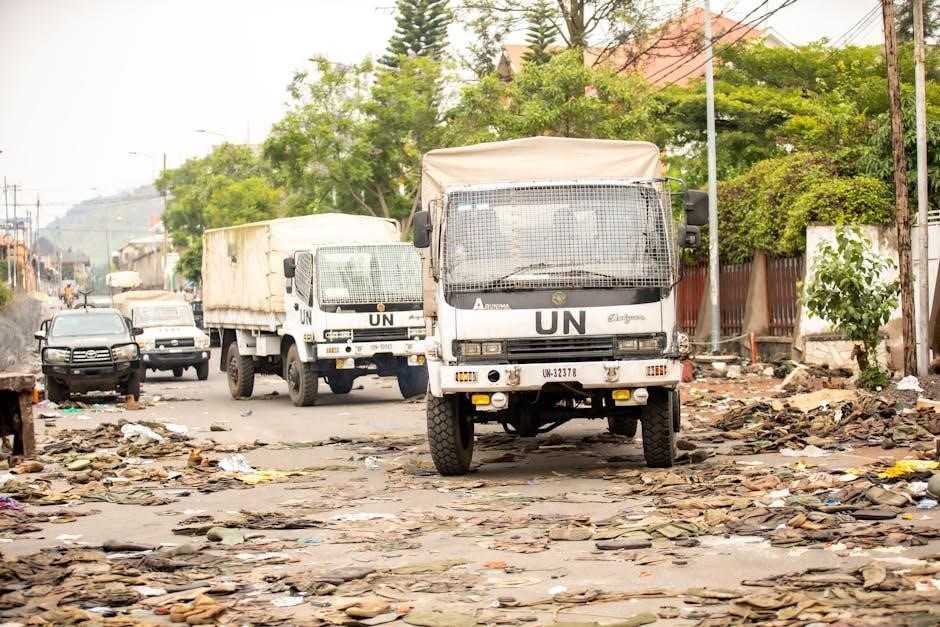
Prioritization should be informed by population density and economic activity. Decentralized systems enhance resilience. Transparent project management‚ as advocated by the World Economic Forum‚ builds trust and ensures equitable resource allocation.
X. Economic Reconstruction: From Barter to Currency
Post-collapse economies initially revert to barter systems‚ driven by immediate needs and lack of established financial institutions. Facilitating localized exchange networks – skills‚ goods‚ and services – is the first step towards economic activity. Transparency and trust are vital in these early stages.
Reintroducing currency requires careful planning. A new currency‚ potentially backed by essential resources or community labor‚ can stimulate trade. Digital currencies offer potential‚ but require secure‚ accessible infrastructure – a cautious technological reintegration.
Sustainable economic models must prioritize local production and reduce dependence on external supply chains. Investing in small businesses and entrepreneurship fosters resilience. The rebuilding of Ukraine‚ with a focus on Ukrainian priorities‚ provides a relevant case study.
Rebuilding trust in financial systems is paramount. Clear regulations‚ accountability‚ and equitable access to capital are essential. Long-term economic stability relies on diversification and sustainable practices.
XI. Developing a Sustainable Post-Collapse Economy
A sustainable post-collapse economy prioritizes resilience and long-term resource availability‚ moving beyond pre-collapse consumption patterns. Local production and circular economy principles are fundamental‚ minimizing waste and maximizing resource utilization. Community-supported agriculture and localized manufacturing are key components.
Energy independence is crucial‚ focusing on renewable sources like solar‚ wind‚ and hydro. Decentralized energy grids enhance resilience against disruptions. Resource management strategies must prioritize conservation and responsible extraction.
Economic diversification reduces vulnerability to shocks. Investing in education and skills training equips the population for a changing job market. Rebuilding infrastructure – transportation‚ sanitation‚ communication – supports economic activity.
The lessons from rebuilding efforts‚ such as Ukraine’s reconstruction‚ emphasize the importance of aligning economic development with community needs and environmental sustainability. Transparency and accountability are vital for fostering trust and attracting investment.
XII. Restoring Education & Knowledge Preservation
Restoring education is paramount for rebuilding civilization‚ ensuring the transmission of vital knowledge and skills to future generations. Prioritizing literacy and numeracy forms the foundation for further learning. Establishing accessible learning centers – utilizing salvaged buildings or temporary structures – is essential.

Curriculum development should focus on practical skills relevant to the new reality: agriculture‚ construction‚ medicine‚ and engineering. Preserving existing knowledge – books‚ digital archives (if accessible)‚ and oral traditions – is crucial. Mentorship programs connecting experienced individuals with learners accelerate skill transfer.
Emphasis should be placed on critical thinking‚ problem-solving‚ and adaptability. Rebuilding trust in institutions requires transparent and equitable access to education. The World Economic Forum’s focus on rebuilding trust extends to the importance of informed citizenry.
Knowledge preservation efforts must include documenting the causes of the collapse to avoid repeating past mistakes. A collaborative approach‚ involving community members in curriculum design and teaching‚ fosters ownership and engagement.
XIII. Curriculum Development for a New Civilization
Curriculum development must transcend simply replicating pre-collapse education; it requires a fundamental reassessment of societal values and priorities. Core subjects should include sustainable living practices – permaculture‚ renewable energy‚ and resource management – reflecting a commitment to long-term environmental stewardship.
Practical skills training is vital: construction techniques utilizing local materials‚ basic medical care‚ water purification‚ and food preservation. Ethical considerations‚ emphasizing cooperation‚ empathy‚ and conflict resolution‚ are equally important. History lessons should analyze past societal failures‚ learning from mistakes to prevent recurrence.
The curriculum must foster adaptability and resilience‚ preparing individuals for an uncertain future. Critical thinking skills are paramount‚ enabling informed decision-making and resistance to manipulation. Arts and humanities should be integrated to cultivate creativity‚ cultural understanding‚ and emotional intelligence.
Leveraging salvaged educational materials and digital resources (where available) can supplement the curriculum. Community involvement in curriculum design ensures relevance and ownership‚ mirroring the collaborative spirit emphasized in rebuilding trust‚ as discussed at the World Economic Forum.
XIV. Healthcare Re-establishment: Addressing Immediate & Long-Term Needs
Initial healthcare priorities center on trauma care‚ infection control‚ and managing chronic conditions with limited resources. Establishing sanitation systems and clean water access is paramount to prevent disease outbreaks – a foundational element of public health. Prioritizing preventative medicine‚ including nutritional guidance and hygiene education‚ reduces the burden on overwhelmed systems.
Traditional medicine and herbal remedies may become essential‚ requiring documentation and responsible integration. Training community health workers expands access to care‚ particularly in remote areas. Mental health support is crucial‚ addressing the psychological trauma of societal collapse and fostering resilience.
Long-term healthcare focuses on rebuilding infrastructure – clinics‚ hospitals‚ and pharmaceutical production. Re-establishing medical education ensures a sustainable workforce. Data collection and epidemiological surveillance are vital for tracking health trends and responding to emerging threats.
The rebuilding process‚ mirroring the “Rebuilding Trust” theme from global forums‚ necessitates equitable access to healthcare‚ fostering a healthy and productive society. Resourcefulness and adaptation are key to overcoming limitations.
XV. Public Health Strategies in a Rebuilding Society
Robust public health strategies are foundational for a stable‚ rebuilding civilization. Initial efforts must prioritize disease surveillance‚ identifying and containing outbreaks with limited diagnostic capabilities. Implementing basic sanitation protocols – waste management‚ water purification – is critical‚ mirroring lessons from disaster recovery scenarios.
Community-based health education programs are essential‚ promoting hygiene‚ nutrition‚ and preventative care. Establishing quarantine procedures and contact tracing protocols‚ though challenging‚ can mitigate the spread of infectious diseases. Resource allocation should favor preventative measures‚ reducing the strain on overwhelmed healthcare systems.
Long-term strategies involve rebuilding public health infrastructure – laboratories‚ sanitation facilities‚ and healthcare workforce training; Data collection and analysis are vital for monitoring health trends and informing policy decisions. Addressing social determinants of health – poverty‚ food insecurity‚ housing – is crucial for achieving health equity.
The “Rebuilding Trust” ethos extends to public health‚ requiring transparency and community engagement. Adaptability and innovation are key to overcoming resource constraints and emerging health challenges.
XVI. Technological Reintegration: A Cautious Approach
Technological reintegration post-collapse demands a measured strategy‚ avoiding uncritical adoption. Prioritize assessing existing infrastructure – power grids‚ communication networks – for salvageable components. Focus initially on technologies supporting basic needs: water purification‚ food production‚ and emergency communication.
A phased approach minimizes disruption and allows for careful evaluation of potential risks. Avoid reliance on complex systems vulnerable to failure or requiring specialized maintenance. Embrace open-source technologies and decentralized systems to foster resilience and community control.
The World Economic Forum’s discussions on trust are particularly relevant here; technology must serve societal needs‚ not exacerbate inequalities. AI integration‚ while potentially transformative‚ requires careful consideration of ethical implications and workforce displacement.
Knowledge preservation is paramount – documenting existing technologies and training individuals in their operation and repair. Prioritize technologies promoting sustainability and minimizing environmental impact. Cautious optimism‚ coupled with rigorous assessment‚ will guide successful reintegration.
XVII. Assessing and Utilizing Existing Technology
A comprehensive inventory of surviving technology is the crucial first step. This includes everything from simple hand tools to complex machinery‚ categorizing by functionality and condition. Prioritize technologies directly supporting survival: generators‚ water pumps‚ medical equipment‚ and communication devices.
Assessment must extend beyond functionality; consider resource requirements for operation and maintenance. Can spare parts be sourced or manufactured? Is specialized knowledge available within the community? Focus on technologies adaptable to local resources and skillsets.
The recent focus on rebuilding‚ as seen in Ukraine’s reconstruction‚ highlights the importance of repurposing existing materials. Salvaged components can be integrated into new systems‚ reducing reliance on external supplies. Open-source platforms and readily available documentation are invaluable.
Documenting discovered technologies – creating manuals and training programs – ensures knowledge transfer. Cautious experimentation and iterative improvement are key. Remember the World Economic Forum’s emphasis on trust; transparency in technological assessment builds confidence.
XVIII. Rebuilding Trust & Social Cohesion
The foundation of any successful rebuilding effort is trust – trust in leadership‚ in institutions‚ and‚ most importantly‚ in each other. Post-collapse environments are rife with suspicion and fear‚ necessitating deliberate strategies to foster social cohesion.
Transparency and accountability are paramount. Decisions must be made openly‚ with clear explanations of rationale and impact. Establishing fair dispute resolution mechanisms is crucial for addressing grievances and preventing escalation. Community involvement in governance builds ownership and reduces resentment;
The World Economic Forum’s 2024 & 2025 theme of “Rebuilding Trust” underscores its global importance. Shared projects – infrastructure repair‚ food production‚ education initiatives – provide opportunities for collaboration and mutual benefit.
Storytelling and remembrance rituals can help process trauma and forge a shared identity. Promoting empathy and understanding through dialogue and cultural exchange is essential. Leadership must model ethical behavior and prioritize the collective good.
XIX. The Role of Leadership in Fostering Trust
Effective leadership is the cornerstone of rebuilding trust in a post-collapse society. Leaders must embody integrity‚ consistency‚ and a genuine commitment to the well-being of the community. Simply holding a position of authority is insufficient; trust must be earned through demonstrable actions.

Transparent communication is vital. Leaders should openly share information‚ even when it’s difficult‚ and explain the reasoning behind decisions. Accountability is equally important – leaders must be willing to admit mistakes and take responsibility for their actions.

As highlighted by the World Economic Forum’s focus on “Rebuilding Trust‚” leaders must prioritize inclusivity and collaboration. Seeking diverse perspectives and actively listening to community concerns builds buy-in and strengthens social cohesion.
Empathy and compassion are essential qualities. Leaders must demonstrate genuine care for the suffering of others and prioritize the needs of the most vulnerable. A long-term vision‚ coupled with practical action‚ inspires confidence and fosters hope for the future.
XX. Long-Term Sustainability & Environmental Considerations
Rebuilding civilization necessitates a paradigm shift towards long-term sustainability and responsible environmental stewardship. Past mistakes‚ leading to ecological damage and resource depletion‚ must not be repeated. A core principle should be minimizing our ecological footprint and maximizing resource efficiency.
Sustainable resource management strategies are paramount. This includes transitioning to renewable energy sources‚ implementing circular economy principles (reduce‚ reuse‚ recycle)‚ and protecting biodiversity. Careful consideration must be given to land use planning‚ prioritizing ecological preservation and responsible agriculture.
The reconstruction of urban centers‚ as seen in Tokyo’s earthquake preparedness projects and Los Angeles’ rebuilding efforts‚ should incorporate green infrastructure – parks‚ green roofs‚ and permeable pavements – to mitigate environmental impacts.
Learning from past civilizations that collapsed due to environmental degradation is crucial. A holistic approach‚ integrating environmental considerations into all aspects of rebuilding‚ is essential for ensuring the long-term viability of the new society. Prioritizing ecological health is not merely an environmental imperative‚ but a fundamental requirement for societal resilience.
XXI. Sustainable Resource Management Strategies
Effective resource management is the bedrock of a resilient‚ post-collapse civilization. Moving beyond the linear “take-make-dispose” model‚ a circular economy must be prioritized‚ emphasizing reduction‚ reuse‚ and recycling of all materials. This minimizes waste and lessens the demand for virgin resources.
Transitioning to renewable energy sources – solar‚ wind‚ hydro‚ geothermal – is non-negotiable. Decentralized energy systems‚ offering greater resilience against disruptions‚ should be favored. Water conservation is equally vital‚ employing efficient irrigation techniques and wastewater treatment technologies.
Sustainable agriculture practices‚ such as permaculture and agroforestry‚ enhance soil health‚ biodiversity‚ and food security. Responsible forestry management ensures the long-term availability of timber and other forest products.
Careful land-use planning prevents deforestation‚ protects watersheds‚ and preserves critical ecosystems. Resource allocation must be equitable‚ ensuring access for all members of society. Monitoring resource consumption and implementing adaptive management strategies are essential for long-term sustainability. Ukraine’s reconstruction offers a case study in building back better‚ prioritizing resource efficiency.
XXII. Learning from Past Civilizations: Avoiding Past Mistakes
History is replete with examples of civilizations that flourished and then collapsed. Studying these past societies – from the Roman Empire to the Maya – provides invaluable insights into the factors that contribute to both success and failure. Ignoring these lessons is a recipe for repeating them.
Overextension of resources‚ environmental degradation‚ social inequality‚ and political instability are recurring themes in civilizational decline. The reconstruction of Ukraine‚ while focused on the present‚ must consider these historical pitfalls. Avoiding unsustainable practices and fostering social cohesion are paramount.
Centralized power structures‚ while efficient in the short term‚ can become brittle and unresponsive to the needs of the population. Promoting decentralized governance and empowering local communities enhances resilience. Technological advancements‚ while beneficial‚ must be implemented cautiously‚ considering their potential unintended consequences.
The World Economic Forum’s emphasis on “Rebuilding Trust” echoes the importance of social capital in maintaining societal stability. Learning from Tokyo’s reconstruction‚ prioritizing earthquake preparedness‚ demonstrates proactive risk mitigation. A long-term perspective‚ informed by historical analysis‚ is crucial for building a truly sustainable civilization.